Quantum Materials and Molecular Frameworks

(QMMF 26)

Designing the Future: From Quantum Materials to Molecular Frameworks

April 21–22, 2026

American University of Sharjah - UAE

Register Now

A premier gathering dedicated to shaping the next generation of advanced materials research. Poster participation only. Best Poster Awards (Top 3) announced after lunch on Day 2.

Symposium Description

The Materials Research Center (MRC) at the American University of Sharjah (AUS) proudly presents the international symposium “Designing the Future: From Quantum Materials to Molecular Frameworks”, a premier gathering dedicated to shaping the next generation of advanced materials research.

This symposium brings together world-class scientists, visionary researchers, and industry innovators to explore the powerful convergence of quantum materials and porous molecular frameworks—two transformative pillars of modern science that are redefining technology in the quantum era.

As we enter an age driven by quantum phenomena, materials with extraordinary electronic, magnetic, and topological properties are opening new frontiers in quantum computing, spintronics, and advanced electronics. At the same time, porous materials such as metal–organic and covalent organic frameworks are revolutionizing energy storage, catalysis, carbon capture, and sustainable chemistry through precise molecular-level design. By uniting these dynamic fields under one platform, the symposium aims to foster cross-disciplinary dialogue, spark pioneering collaborations, and accelerate innovations that bridge quantum-scale physics with molecular engineering.

Featuring distinguished keynote speakers and leading experts from around the world, the conference offers a vibrant environment for exchanging groundbreaking ideas, discussing emerging research trends, and inspiring the next wave of scientific discovery. More than a meeting of minds, this symposium represents a forward-looking vision—where fundamental science meets global challenges, and where materials are designed not only to understand the world, but to transform it.

Poster participation only. Talks are limited to keynote speakers. All accepted posters are eligible for the Best Poster Awards (Top 3). Winners announced after lunch on Day 2.

Symposium Program

Designing the Future: From Quantum Materials to Molecular Frameworks. Two days of back-to-back keynote lectures (40–45 min each) with coffee and lunch breaks. Posters displayed throughout both days; evaluation on Day 1 at 5:00 PM. Best Poster Awards announced after lunch on Day 2.

Day 1 - April 21, 2026

  • 08:30 – 09:00 Registration & Welcome Coffee
  • 09:00 – 09:05 Opening Remarks – Associate Vice Chancellor for Research Infrastructure
  • 09:05 – 09:10 Opening Remarks – Director, Materials Research Center
  • 09:10 – 09:55 Keynote Lecture 1
  • 09:55 – 10:40 Keynote Lecture 2
  • 10:40 – 11:00 Coffee Break
  • 11:00 – 11:45 Keynote Lecture 3
  • 11:45 – 12:30 Keynote Lecture 4
  • 12:30 – 13:15 Keynote Lecture 5
  • 13:15 – 14:15 Lunch
  • 14:15 – 15:00 Keynote Lecture 6
  • 15:00 – 15:20 Coffee Break
  • 15:20 – 17:20 Poster Session I (Evaluation at 5:00 PM)
  • 17:20 Adjourn – Day 1

Day 2 - April 22, 2026

  • 08:30 – 09:00 Registration & Welcome Coffee
  • 09:00 – 09:45 Keynote Lecture 7
  • 09:45 – 10:30 Keynote Lecture 8
  • 10:30 – 10:50 Coffee Break
  • 10:50 – 11:35 Keynote Lecture 9
  • 11:35 – 12:20 Keynote Lecture 10
  • 12:20 – 13:20 Lunch
  • 13:20 – 13:45 Best Poster Awards Announcement
  • 13:45 – 14:30 Keynote Lecture 11
  • 14:30 – 15:15 Keynote Lecture 12
  • 15:15 – 15:35 Coffee Break
  • 15:35 – 17:35 Poster Session II
  • 17:35 – 18:00 Closing Ceremony
  • 19:00 – 22:00 Symposium Dinner

Keynote Speakers

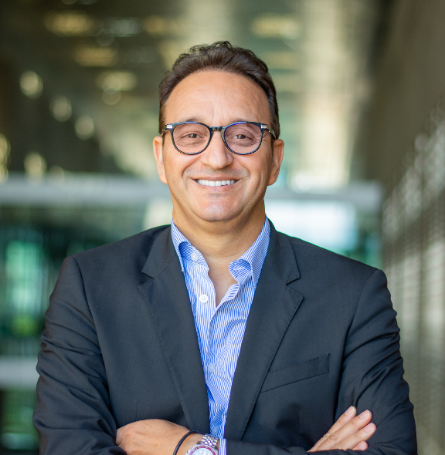
Professor Mohamed Eddaoudi

Professor Mohamed Eddaoudi

King Abdullah University of Science & Technology (KAUST)

Ibn Alhaytham Distinguished Professor of Chemistry at KAUST and Chair of the Advanced Membranes and Porous Materials Platform. A pioneer of metal–organic framework (MOF) chemistry and reticular design, he has transformed the rational construction of functional porous materials for energy and environmental sustainability, including hydrogen storage, CO₂ capture, and gas separations. A Highly Cited Researcher for over a decade, he has authored 350+ publications with more than 108,000 citations (h-index 130) and holds 50+ patents.
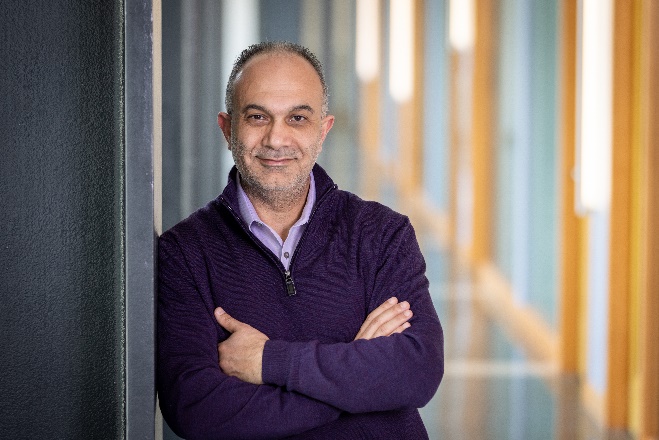
Professor Omar K. Farha

Professor Omar K. Farha

Northwestern University

Chair of Chemistry and Charles E. and Emma H. Morrison Professor at Northwestern University, and a global leader in metal–organic framework (MOF) science. He also serves as Executive Editor of ACS Applied Materials & Interfaces and Chief Scientific Officer of Numat Technologies. His research addresses critical challenges in energy, sustainability, and defense through advanced porous materials. With over 730 publications, 20 patents, and 126,000 citations (h-index 175), he has been recognized as a Highly Cited Researcher for more than a decade.
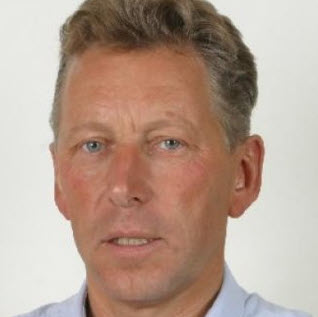
Professor François Peeters

Professor François Peeters

University of Antwerp, Belgium

Distinguished theoretical physicist and Full Professor at the University of Antwerp. He earned his Ph.D. in physics in 1982 and conducted postdoctoral research at Bell Laboratories and Bell Communications Research in the United States. His research focuses on computational modeling of mesoscopic and nanoscopic systems, including quantum dots, superconducting nanostructures, graphene, and other two-dimensional materials. A Fellow of both the American Physical Society and the European Physical Society, he has published over 1,000 papers with more than 75,000 citations (h-index 124).
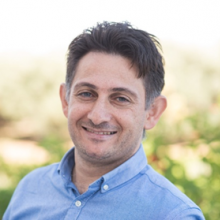
Professor Emmanuel Stratakis

Professor Emmanuel Stratakis

Foundation for Research and Technology Hellas (FORTH), Greece

Research Director and Acting Director of the Institute of Electronic Structure and Laser (IESL) at FORTH. A leading authority in ultrafast laser micro- and nano-processing of materials, he heads the Ultrafast Laser Micro- and Nano-processing Laboratory and directs the Nanoscience Facility of FORTH. With over 300 SCI publications, 17,000+ citations, and an h-index of 71, his work has significantly shaped advanced materials engineering. An OPTICA Fellow and European Innovation Council Ambassador, he has coordinated major European projects and delivered 150+ invited talks worldwide.
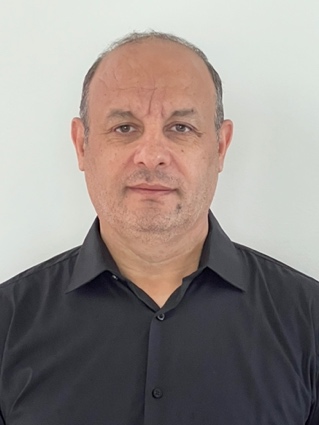
Professor Hani M. El-Kaderi

Professor Hani M. El-Kaderi

Virginia Commonwealth University

Professor of Chemistry and Director of Sustainable Energy Systems at Virginia Commonwealth University. An internationally recognized leader in porous materials chemistry, he contributed to foundational developments in covalent organic frameworks (COFs) during postdoctoral research at the University of Michigan and UCLA. His work focuses on the design and synthesis of porous organic polymers, COFs, and advanced carbon materials for clean-energy applications, including CO₂ capture, rechargeable batteries, capacitors, and catalysis. A recipient of the AAAS Newcomb Cleveland Prize and multiple research excellence awards.
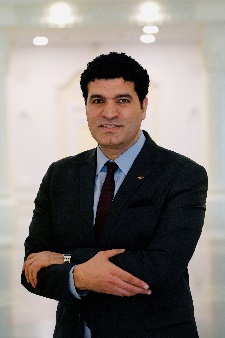
Professor Mahmoud Abdel Hafiez

Professor Mahmoud Abdel-Hafiez

University of Sharjah

Professor of Physics at the University of Sharjah and internationally recognized expert in quantum materials under extreme conditions. He earned his Ph.D. from Dresden University of Technology and has held research positions in Germany, China, Sweden, and the United States, including at Harvard University and HPSTAR. His work explores superconductivity, charge density waves, magnetism, and topology in quantum materials, particularly under high pressure. Recipient of the German Research Foundation Young Investigator Award, he has published over 115 peer-reviewed papers.
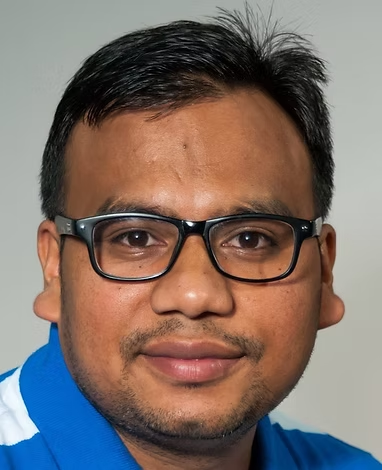
Professor Bhagwati Prasad

Professor Bhagwati Prasad

Indian Institute of Science, Bengaluru

Infosys Young Investigator and faculty member in the Department of Materials Engineering at the Indian Institute of Science (IISc), Bengaluru. He leads the DEMAND Group, pioneering research in spintronics, magnetoelectrics, quantum and electronic materials for beyond-CMOS computing, neuromorphic systems, and energy-efficient memory technologies. A Ph.D. graduate of the University of Cambridge, he has held research positions at UC Berkeley, the Max Planck Institute, and Western Digital. With 50+ high-impact publications, 40+ patents, and 4,000+ citations, his work bridges fundamental materials science and next-generation nanoelectronic device innovation.
Professor Serkan Ateş

Professor Serkan Ateş

Sabancı University, Türkiye

Associate Professor at Sabancı University, Türkiye, where he leads the Quantum Photonics Systems Laboratory. His research advances quantum optics and nanophotonics using solid-state platforms such as quantum dots, transition metal dichalcogenides (TMDCs), and wide-bandgap defects for emerging quantum technologies. He earned his Ph.D. from the University of Stuttgart and held research positions at the Technical University of Denmark, NIST (USA), and TÜBİTAK BİLGEM. Founder of QLocked Quantum Technologies, he is a recipient of the TÜBA-GEBİP Presidential Young Researcher Award and the BAGEP Young Scientist Award in Physics.

Ke Lin

Professor Lin Ke

Shandong University of Science & Technology

Leading researcher in terahertz photonics and topological electromagnetic fields. Her work focuses on compact and scalable platforms for terahertz beam engineering, symmetry-broken metasurfaces, and spatiotemporal topological field manipulation. She has pioneered innovative approaches for generating controllable Meron and Skyrmion electromagnetic states, advancing high-dimensional information encoding and next-generation sensing technologies. Through her research, Prof. Ke bridges fundamental topological optics with practical applications in beam shaping, material characterization, and integrated photonic systems.
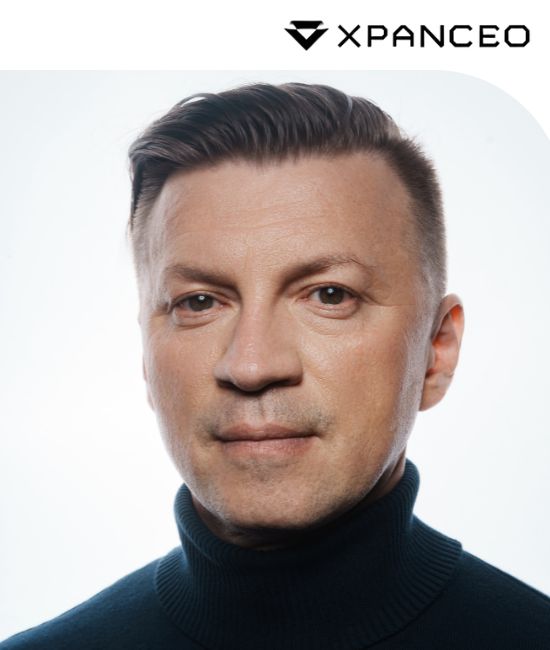
Professor Valentyn Volkov

Professor Valentyn S. Volkov

XPANCEO / Centre for Photonics and 2D Materials

Founder and CTO of XPANCEO and leading expert in quantum and nanophotonic materials. With a Ph.D. in physics from Aalborg University, he has held academic positions across Europe and directed the Centre for Photonics and 2D Materials. Now based in the UAE, his research spans 2D materials, van der Waals heterostructures, quantum materials, biosensing, plasmonics, and nano-optics. He has authored over 250 peer-reviewed publications with more than 11,000 citations.
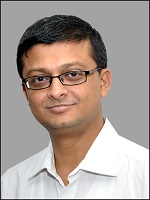
Professor Rahul Banerjee

Professor Rahul Banerjee

Indian Institute of Science Education and Research (IISER) Kolkata

Professor and leading authority in porous materials chemistry. His research focuses on the design and synthesis of structurally robust covalent organic frameworks (COFs) and other advanced porous materials for applications such as CO₂ capture and sustainable technologies. In collaboration with TATA Steel, his group is developing scalable processes for chemically stable COFs, considered a global breakthrough in porous materials research. With over 190 publications, 24 patent applications, and an h-index of 96, he is also an Associate Editor of the Journal of the American Chemical Society.
Professor Panče Naumov

Professor Panče Naumov

New York University Abu Dhabi

Full Professor of Chemistry at NYU Abu Dhabi and Director of the Center for Smart Engineering Materials. A global leader in smart and responsive materials, he also serves as Global Network Professor at New York University and Associate Editor of the Journal of the American Chemical Society. His Smart Materials Lab is widely recognized as a leading research group in the UAE, contributing a significant share of the country's high-impact chemistry publications. With over 300 publications, extensive international awards, and leadership roles across major scientific organizations, his work advances crystal engineering, photochemistry, and functional materials design.

Registration & Deadlines

Important Dates

  • Abstract Submission Deadline March 25, 2026
  • Notification of Acceptance April 5, 2026
  • Early Registration Deadline April 10, 2026
  • Symposium Dates April 21–22, 2026

Call for Posters

The organizing committee warmly invites researchers, postdoctoral fellows, and graduate students to submit abstracts for poster presentations only. Talks are limited to keynote speakers. Poster sessions will provide a vibrant platform for presenting emerging research and engaging with world-class scientists.

Guidelines: Poster size: A1 (594 × 841 mm), portrait orientation. Abstract: maximum 300 words. Include title, authors, affiliations, and presenting author contact. Submission deadline: March 25, 2026. Notification of acceptance: April 5, 2026. All accepted posters are eligible for the Best Poster Awards (Top 3).

0/2000 characters

Keynote Abstracts

Abstracts of keynote lectures presented at QMMF 26.

Professor Mohamed Eddaoudi

Reticular chemistry: The design journey from highly-connected building blocks to merged nets

We present our recently developed approaches for the design of intricate multicomponent reticular structures: the centring structure-directing agents (c-SDA) strategy and the "merged-net" approach. The merged-net methodology simplifies the design of complex reticular structures. By analyzing 53 edge-transitive nets, we identified unique "signature nets" that facilitate merging distinct frameworks, producing a catalog of 353 new merged-net structures. Progress in MOF Chemistry with built-in information allowing access to highly stable and made-to-order porous materials toward energy and environmental sustainability will also be presented.

Professor Omar K. Farha

Global Solutions at the Nanoscale: The Role of Metal-Organic Frameworks

Metal-organic frameworks (MOFs)—often described as "smart and programmable sponges"—are set to become hallmark materials of the 21st century. MOFs can be visualized as nano-scale structures where metal nodes and organic linkers create highly ordered, periodic arrangements. This modular architecture grants MOFs exceptional versatility and tunability, opening the door to diverse applications in energy, catalysis, carbon capture, and beyond.

Professor François Peeters

Quantum engineering and mass transport with graphene membranes

Graphene membranes are increasingly used in membrane-based technologies. The unique properties of graphene—strength, flatness, and impermeability—are essential in the study of mass transport of ions, atoms, and molecules through sub-nanometer pores or nano-channels. An overview will be presented of sub-nanoscale water and proton transport, leading to information on how water becomes layered when confined to low dimensions. This transport can be tuned by electric fields and light.

Professor Emmanuel Stratakis

Laser Engineering and Diagnostics of two-dimensional materials

Ultrashort and pulsed-laser methodologies provide a versatile route for both functional engineering and non-destructive diagnostics of two-dimensional (2D) materials relevant to optoelectronics and nanoelectronics. This work highlights laser-enabled strategies spanning device-oriented processing of graphene and optical metrology of transition-metal dichalcogenide (TMD) monolayers and heterostructures. Pulsed-laser approaches enable fabrication of transparent graphene electrodes. For TMDs, a rapid photochemical route is presented for tunable carrier-density control.

Professor Hani M. El-Kaderi

Additive Manufacturing of Porous Electrodes for High-Energy Density Batteries

Porous crystalline materials such as MOFs and COFs offer unique opportunities to address challenges in rechargeable batteries. We demonstrate how multivariate MOFs can be converted into catalytically active, porous carbons that enhance redox kinetics and cycling stability. We introduce additive manufacturing, specifically 3D direct ink writing, as a transformative strategy to fabricate current-collector-free, three-dimensional porous electrodes with precisely engineered architectures. These 3D-printed cathodes exhibit improved ion diffusion, electrolyte accessibility, and high areal capacity.

Professor Mahmoud Abdel-Hafiez

Quantum Matter under Extreme Conditions

Quantum materials continue to surprise us with their rich and often unexpected behavior when pushed to their limits. By applying extreme conditions such as high pressure, we can tune their atomic and electronic landscapes in ways that reveal entirely new phenomena. This talk explores how pressure reshapes the balance between charge density waves (CDWs), superconductivity, and magnetism in transition metal dichalcogenides (TMDs) and transition metal halides. High pressure serves as a clean, powerful tool to manipulate quantum matter and unlock new physics.

Professor Bhagwati Prasad

Beyond-CMOS Computing: Energy-Efficient Spintronic Logic and Memory Platforms for AI Workloads

Future logic-in-memory hardware requires non-volatile switching at ultralow voltages in CMOS-compatible material stacks. We outline a beyond-CMOS pathway that unifies magnetoelectric (ME) coupling, perpendicular magnetic anisotropy (PMA), and voltage-controlled magnetic anisotropy (VCMA) to enable deterministic, electric-field-only operation. Through interfacial engineering of metallic/oxide heterostructures, large PMA and voltage-tunable interlayer exchange can be realized. Integrated magneto-electric and spin-orbit building blocks support MESO switching pathways, with recent nanoscale demonstrations showing voltage-based write and read at room temperature.

Professor Serkan Ateş

Quantum Photonics and Nanophotonics

Research advances in quantum optics and nanophotonics using solid-state platforms such as quantum dots, transition metal dichalcogenides (TMDCs), and wide-bandgap defects for emerging quantum technologies.

Professor Lin Ke

Compact Terahertz Beam Forming and Spatiotemporal Topological Fields via Symmetry-Broken Gratings

Topological electromagnetic fields such as Merons (half-Skyrmions) are of great interest due to their robustness and potential for high-capacity, low-power information processing. We demonstrate a compact planar approach for generating terahertz spatiotemporal topological fields using a symmetry-broken grating. By breaking the symmetry of a periodic grating acting as a metasurface, modes with different angular momenta are coupled in momentum–frequency space, enabling direct generation of spatiotemporal Merons in transmission without interferometry.

Professor Valentyn S. Volkov

Van der Waals Materials for Anisotropic Nanophotonics

Van der Waals (vdW) materials are at the forefront of modern optoelectronics and nanophotonics. Our research shows that vdW materials, due to their strong intralayer covalent bonding and weak interlayer interactions, exhibit birefringence exceeding 1.5 in the infrared and 3.0 in the visible range—unparalleled among known materials. This extreme anisotropy allows vdW-based waveguides with footprints of just tens of nanometers, enabling next-generation integrated circuits and optical components.

Professor Rahul Banerjee

Covalent Organic Frameworks for Sustainable Technologies

Research focuses on the design and synthesis of structurally robust covalent organic frameworks (COFs) and advanced porous materials for CO₂ capture and sustainable technologies. In collaboration with TATA Steel, development of scalable processes for chemically stable COFs.

Professor Panče Naumov

Dynamic Organic Crystals

The shift in focus from structure to properties to function of organic solids parallels the need to apply our understanding of crystal structure to explaining related properties, with the goal of harnessing that knowledge in applications requiring soft, light-weight, and biocompatible organic solids. Adaptive molecular single crystals warrant particular attention as a new class of materials for light, flexible, and environmentally benign devices—memories, capacitors, sensors, and actuators. Under the umbrella term "crystal adaptronics," recent research aims to assess the appositeness of dynamic crystals for applications requiring fast, reversible operation over prolonged periods.

Organized By

Materials Research Center (MRC)

American University of Sharjah

Co-Chairs: Mehmet Egilmez, Ali Alnaser

Organizing Committee: Hasan Sahin, Ousam Elkhadri